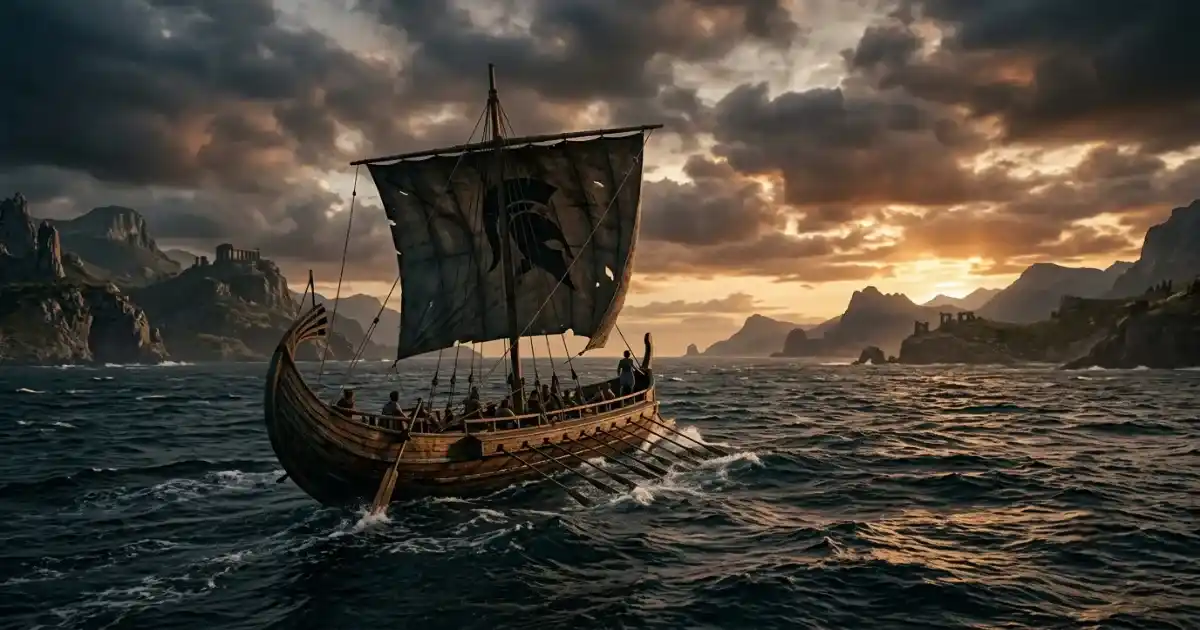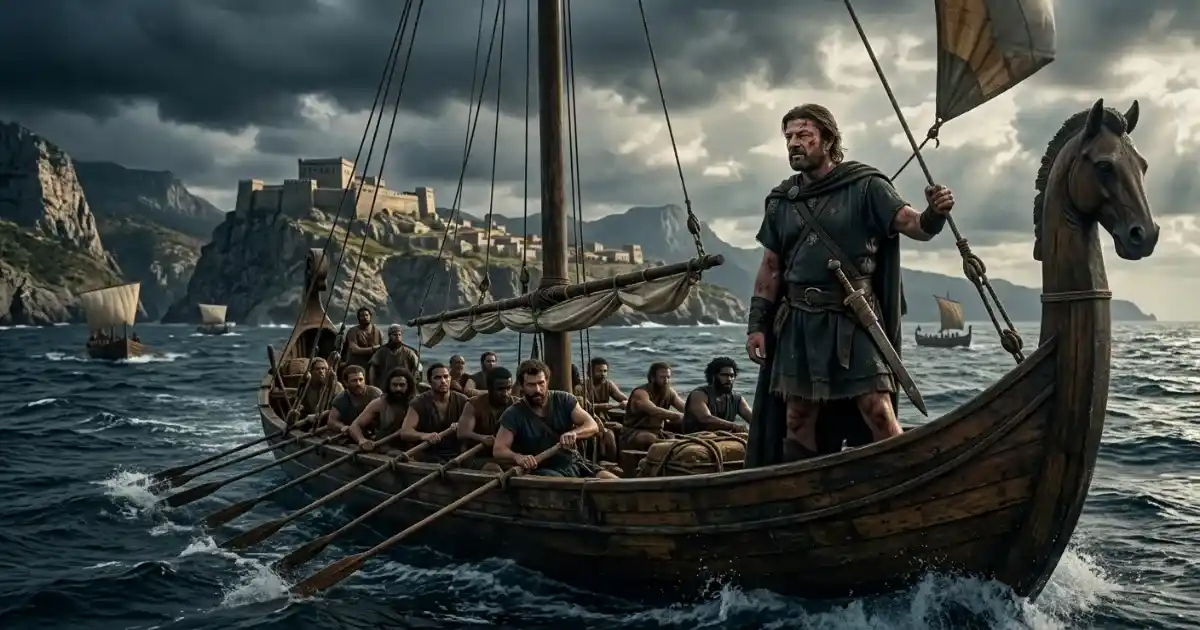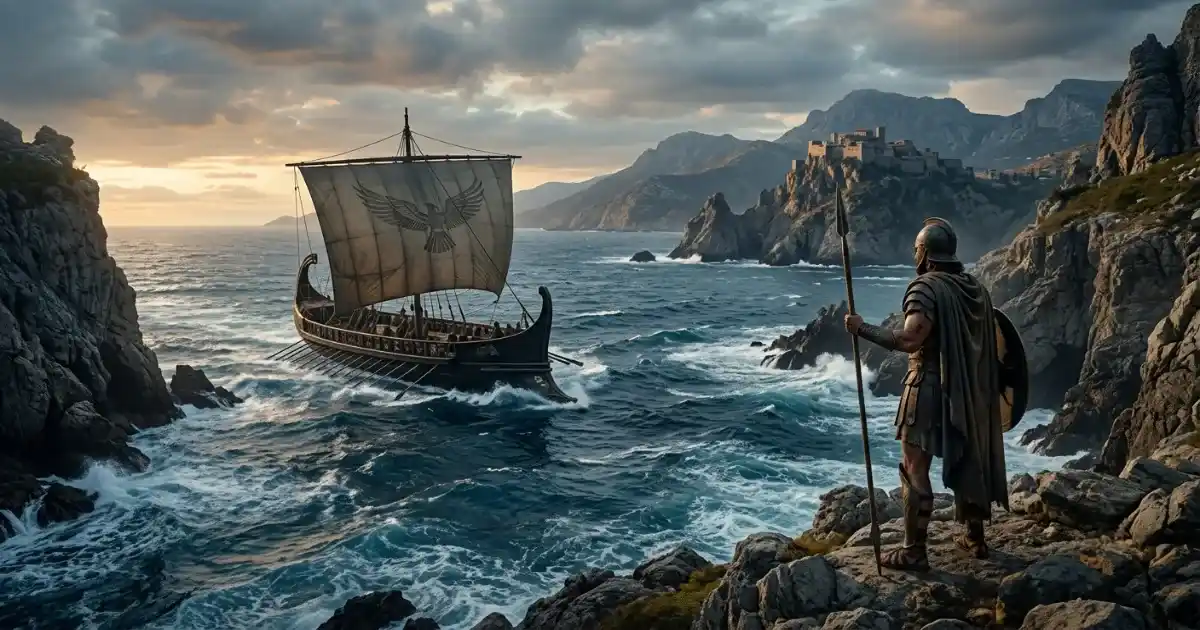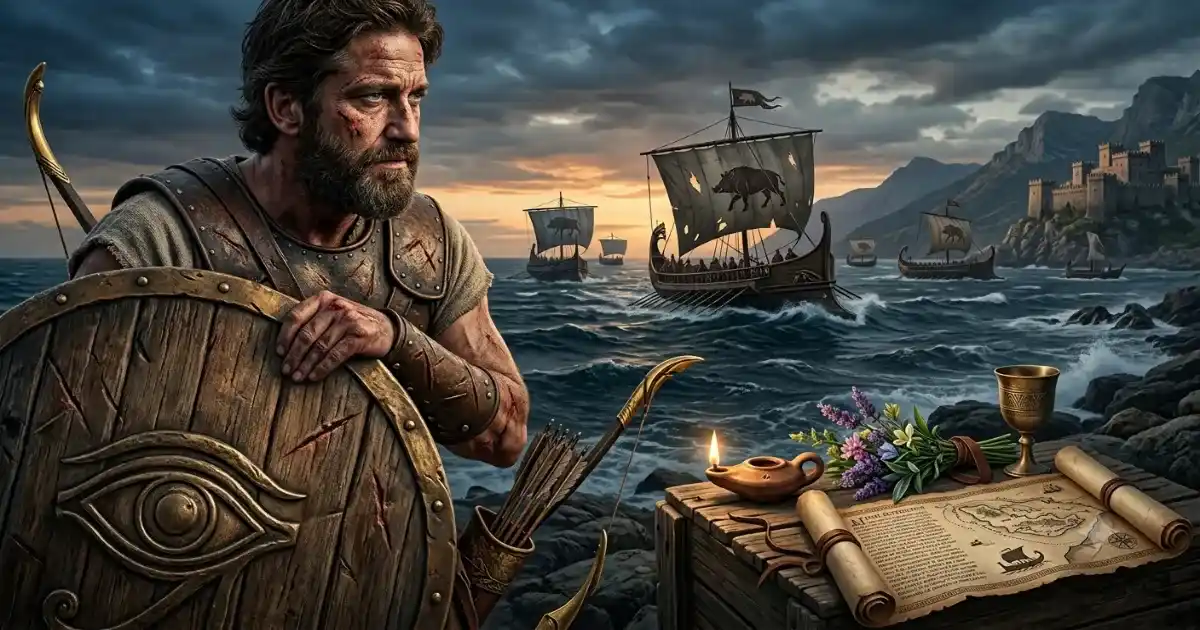
Christopher Nolan's The Odyssey is much more than a faithful adaptation of Homer's epic poem. While watching the film, I noticed several hidden mythology references, symbolic visual details, and subtle Nolan-style storytelling clues that add deeper meaning to Odysseus' journey. Some are obvious, but many are easy to miss on your first viewing.
Spoiler Warning
This article contains major spoilers for The Odyssey (2026). If you haven't watched the movie yet, I'd recommend coming back after your first viewing. Trust me—many of these hidden details become even more satisfying once you know where to look.
Movie Overview
Christopher Nolan's The Odyssey reimagines Homer's legendary Greek epic with a cinematic scale that feels both ancient and surprisingly modern. Instead of treating the story as a simple fantasy adventure, Nolan focuses on survival, identity, sacrifice, leadership, and the emotional cost of war.
What impressed me most while watching wasn't just the breathtaking visuals or large-scale action sequences. It was how every major location, character interaction, and visual choice seemed to carry a second layer of meaning. Even quiet scenes often hide references to Greek mythology, the original poem, or Nolan's signature storytelling style.
That makes The Odyssey a movie worth watching more than once.
What Are Easter Eggs in The Odyssey Movie?
Unlike superhero movies, The Odyssey doesn't rely on flashy cameos or obvious post-credit surprises.
Instead, most Easter eggs are hidden inside:
- Visual symbolism
- Dialogue callbacks
- References to Homer's original poem
- Greek mythology
- Character behavior
- Costume details
- Camera framing
- Christopher Nolan's recurring storytelling themes
When I watched the film, I realized that many scenes seemed straightforward at first. But after thinking about them later, they carried much deeper meanings than I initially expected.
That's exactly what makes Nolan's movies so rewarding to revisit.
Top Easter Eggs You Missed
Easter Egg 1: Homer's Original Epic Is Hidden Throughout the Movie
One thing I appreciated immediately is that Nolan doesn't simply retell Homer's Odyssey. Instead, he quietly rewards viewers who know the original poem.
Several conversations use wording that closely echoes themes from Homer's text without directly quoting it. Rather than modernizing every line of dialogue, the movie preserves the spirit of the ancient epic.
While watching, I noticed moments where Odysseus doesn't simply speak like a warrior. He often sounds like someone carrying years of emotional exhaustion, which perfectly matches the original literary version of the character.
If you've ever read portions of Homer's Odyssey, you'll probably recognize these subtle parallels.
Even viewers unfamiliar with the poem will feel that many scenes have a timeless quality, but readers of the original work will notice that Nolan intentionally keeps the soul of the ancient story alive beneath the modern screenplay.
This isn't fan service.
It's respect for one of history's greatest stories.
Easter Egg 2: Odysseus' Journey Mirrors More Than a Physical Adventure
At first glance, The Odyssey appears to be about a king trying to return home.
But while I was watching, it became clear that the real journey isn't measured in miles.
It's measured in change.
Every island, every battle, every temptation, and every loss slowly transforms Odysseus into a completely different person than the hero who left Troy.
That mirrors one of mythology's oldest storytelling patterns—the Hero's Journey.
Interestingly, Nolan avoids presenting Odysseus as an unbeatable legend.
Instead, he often looks tired.
Uncertain.
Emotionally conflicted.
Those moments make him feel surprisingly human.
By the final act, returning home isn't simply about reaching Ithaca.
It's about earning the right to become the man his family remembers.
That psychological transformation is one of the movie's smartest hidden layers.
Easter Egg 3: The Gods Influence Everything—Even When They Aren't on Screen
One detail that really stood out to me was how the gods never feel disconnected from the story.
Even in scenes where no deity physically appears, their influence seems to shape every important decision.
Storms arrive at strangely perfect moments.
Certain characters escape situations that feel almost impossible.
Some victories seem earned through courage, while others feel guided by something beyond human control.
Instead of making divine intervention obvious, Nolan allows audiences to question whether fate, coincidence, or the gods themselves are directing events.
That ambiguity makes the mythology feel believable.
As someone watching the film, I found myself constantly asking:
"Did that happen because Odysseus made the right choice...or because someone above was quietly helping him?"
The movie never forces an answer.
And that's exactly why these moments work so well.
Easter Egg 4: Every Monster Represents an Inner Battle
One of my favorite aspects of the film is that the monsters rarely feel like ordinary fantasy creatures.
Instead, each one symbolizes a different psychological obstacle.
While watching, I realized the movie isn't asking us to fear monsters.
It's asking us to understand what they represent.
Some creatures embody temptation.
Others represent pride.
Some symbolize fear.
Others reflect revenge.
That's surprisingly faithful to Greek mythology, where monsters often serve as external versions of internal human struggles.
Because of this approach, every encounter feels meaningful instead of existing purely for action.
You'll probably enjoy these sequences the first time because they're visually spectacular.
But during a second viewing, you'll likely notice that each creature changes Odysseus emotionally before it changes the direction of his journey physically.
That's classic mythological storytelling.
Easter Egg 5: Penelope Is More Than Someone Waiting at Home
One misconception many viewers have before watching The Odyssey is that Penelope exists only as the wife waiting for Odysseus to return.
The movie quietly challenges that idea.
Several scenes emphasize patience as a form of strength rather than weakness.
While Odysseus fights monsters across the world, Penelope fights uncertainty every single day.
Neither battle is easier.
They're simply different.
One moment especially stayed with me.
Without relying on dramatic speeches, the film communicates that loyalty isn't passive.
It's a daily decision.
That subtle message reflects one of the original poem's strongest themes.
In many ways, Penelope becomes the emotional anchor of the entire story.
When you watch the movie, pay close attention to the quieter scenes involving her.
They're easy to overlook because there isn't constant action.
But emotionally, they carry just as much weight as the biggest battles.
For me, those scenes transformed The Odyssey from a survival adventure into a story about family, endurance, and the meaning of home.
Easter Egg 6: The Sea Is More Than a Setting—It's a Character
One of the first things I noticed after the movie ended was how differently the ocean is treated compared to most adventure films.
Normally, the sea is just where the story happens.
Here, it almost feels alive.
Every calm wave gives you hope, and every violent storm reminds you that Odysseus is never truly in control.
While watching, I actually caught myself relaxing during the quieter sailing scenes, only for Nolan to completely shift the mood moments later. That emotional unpredictability mirrors Odysseus' own journey.
In Greek mythology, the sea has always represented uncertainty, destiny, and the power of the gods.
Nolan leans into that symbolism instead of overexplaining it.
By the end of the film, I stopped looking at the ocean as a backdrop. It became another character—one that constantly tested every decision Odysseus made.
Easter Egg 7: Christopher Nolan's Signature Storytelling Is Everywhere
If you've watched Christopher Nolan's previous films, you'll probably notice several familiar storytelling techniques.
I immediately recognized his preference for letting visuals explain emotions instead of relying on long dialogue.
There are scenes where characters barely speak, yet you completely understand what they're feeling through silence, camera movement, and facial expressions.
Another thing I appreciated is how the movie trusts the audience.
Instead of explaining every mystery, Nolan leaves small gaps for viewers to connect on their own.
That's something I've always enjoyed about his filmmaking.
Even after the credits rolled, I kept replaying certain scenes in my head because I felt there was another layer hiding underneath.
That's usually a sign that a movie is doing something right.
Easter Egg 8: Memory and Identity Shape Every Decision
One theme that quietly runs through the entire movie is memory.
At first, I thought the story was only about returning home.
But the more I watched, the more I realized it's also about remembering who Odysseus truly is.
Years of war, endless battles, painful losses, and constant survival slowly change him.
The question isn't simply whether he'll reach Ithaca.
It's whether the man who returns is still the same husband, father, and king who left.
Several emotional scenes hint at this idea without directly stating it.
Small visual choices—pauses before conversations, lingering looks, and moments of silence—suggest that Odysseus is carrying invisible emotional scars.
For me, this became one of the strongest themes in the entire movie.
It transformed The Odyssey from an action epic into a deeply human story about identity.
Easter Egg 9: Greek Mythology Is Hidden in Small Details
Even if you don't know Greek mythology very well, you'll probably notice that many symbols keep appearing throughout the film.
Certain animals, statues, temples, weapons, and pieces of architecture seem carefully chosen rather than randomly designed.
During my second mental replay of the movie, I realized many of these visual elements quietly reinforce ideas like wisdom, temptation, sacrifice, divine protection, and fate.
None of these details interrupt the story.
They're simply there for viewers who enjoy paying attention.
That's one reason I think The Odyssey has strong rewatch value.
Every revisit is likely to reveal another layer you completely overlooked the first time.
Easter Egg 10: Home Was Always the Greatest Treasure
Most adventure movies build toward defeating the final enemy.
The Odyssey feels different.
Throughout the film, it slowly becomes clear that home—not victory—is the ultimate reward.
Every challenge pushes Odysseus closer to understanding what truly matters.
While watching the final act, I didn't feel like I was seeing a hero celebrate another victory.
I felt like I was watching someone finally understand the value of everything he almost lost.
That emotional payoff makes several earlier scenes far more meaningful in retrospect.
It's a subtle Easter egg hidden inside the movie's central message:
The greatest journey isn't across the sea.
It's the journey back to the people who make a place feel like home.
Hidden References to Greek Mythology
One thing I genuinely enjoyed is that the film respects Greek mythology instead of simply borrowing famous names.
Rather than turning every myth into an action sequence, it treats mythology as the foundation of the world itself.
You'll notice recurring themes such as:
- Fate versus free will
- Pride leading to destruction
- The consequences of breaking divine rules
- Loyalty rewarded over selfishness
- Wisdom proving more valuable than brute strength
If you've previously read The Odyssey or explored other Greek myths, you'll recognize many of these ideas woven naturally into the story.
Even viewers with no mythology background can enjoy the movie, but those familiar with the source material will almost certainly catch additional layers.
Connections to Other Christopher Nolan Movies
Although The Odyssey stands on its own, I couldn't help noticing several storytelling choices that reminded me of Nolan's earlier work.
Without repeating the same formulas, he continues exploring themes that have appeared throughout his career:
- Time changes people more than events do.
- Identity is constantly questioned.
- Heroes carry emotional burdens instead of feeling invincible.
- Moral choices matter more than spectacle.
- Audiences are encouraged to interpret rather than simply consume.
That approach gives The Odyssey a familiar Nolan identity while still allowing it to feel unique.
Director References
Christopher Nolan avoids flashy fan service.
Instead, his signature appears in much quieter ways.
After watching the film, these creative choices stood out to me:
- Practical-looking environments that feel grounded.
- Long stretches where visuals replace exposition.
- Carefully paced emotional moments between large action sequences.
- Symbolic imagery that gains meaning after the movie ends.
- A strong emphasis on consequence rather than simple heroism.
These are the kinds of details that usually become even more rewarding during a second viewing.
Comic Book Inspirations
Unlike many modern blockbuster films, The Odyssey isn't built around comic book source material.
Its inspiration comes directly from Homer's ancient Greek epic poem, one of the oldest surviving works of Western literature.
Rather than adapting superhero storytelling conventions, the film embraces mythology, philosophy, and classical themes of perseverance, sacrifice, temptation, leadership, and homecoming.
For that reason, there are no obvious comic book Easter eggs woven into the narrative. Instead, the movie rewards viewers who recognize references to Greek legends and classical literature.
What These Easter Eggs Mean for Future Movies
One question I kept asking myself after leaving the theater was whether all of these hidden details were simply callbacks—or hints toward something bigger.
Personally, I think most of them exist to deepen this story rather than tease a shared universe.
The symbolism surrounding fate, leadership, identity, and sacrifice feels intentionally timeless.
Instead of setting up sequels through obvious cliffhangers, the movie invites audiences to revisit the journey with fresh perspective.
That's something I genuinely appreciate.
Some films try to end by advertising the next chapter.
The Odyssey chooses to make you think about the chapter you just experienced.
And honestly, I think that's a much more satisfying ending.
Final Thoughts
Walking out of The Odyssey, I realized I hadn't just watched another historical adventure. I had watched a film that constantly encouraged me to pay attention.
The obvious moments are impressive, but it's the quieter ones that stayed with me long after the credits rolled. A glance between characters, the symbolism behind the sea, recurring mythology references, and Nolan's restrained storytelling all make this a movie that rewards curiosity.
If you're planning to watch The Odyssey again, I'd suggest slowing down and paying attention to the details instead of only the action. You may discover that some of the film's most memorable moments aren't the loudest—they're the ones hidden in plain sight.
And honestly, that's what makes searching for Easter eggs so enjoyable. Every revisit feels like uncovering another piece of a story that was there all along.