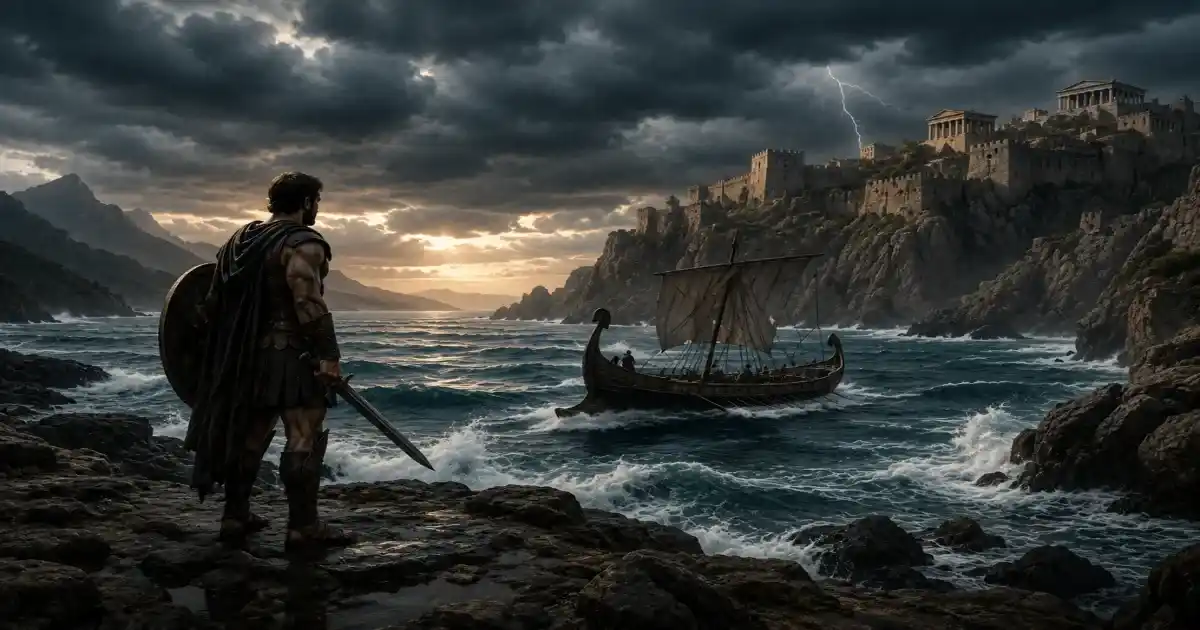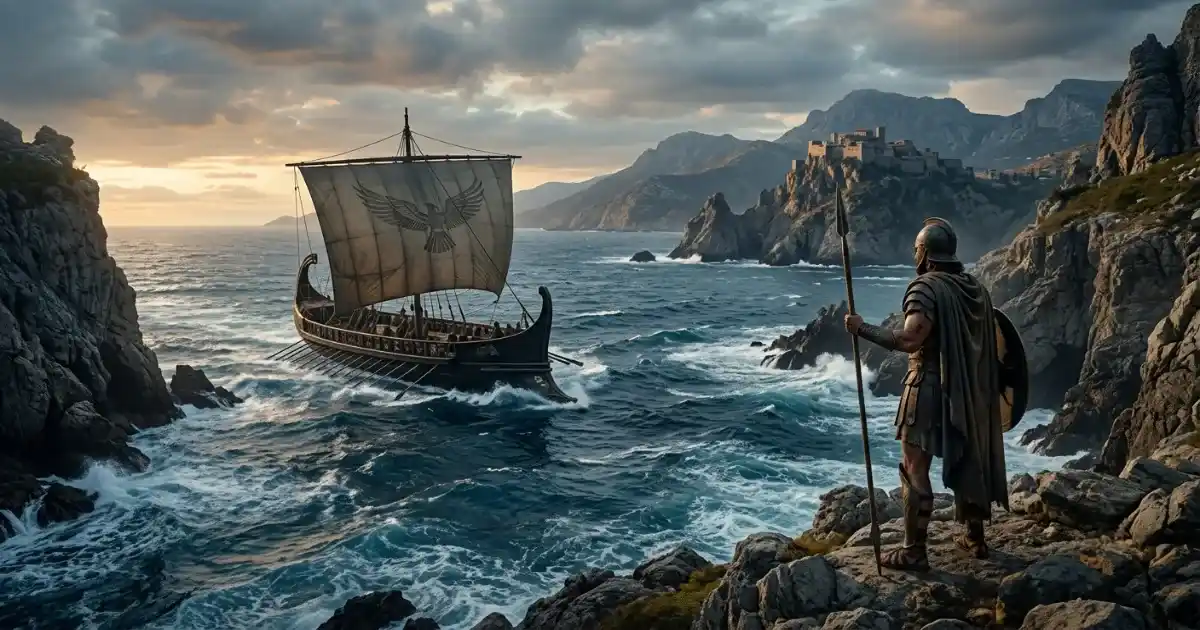
Quick Timeline Summary
When I first watched The Odyssey (2026), the biggest thing that stood out to me was how the movie is not just about a warrior trying to reach home — it is about a man struggling with time, memory, loss, and the consequences of war.
Christopher Nolan’s adaptation brings Homer’s ancient Greek epic to a modern cinematic experience by focusing on the long and difficult journey of Odysseus after the Trojan War. The timeline of the movie begins after the fall of Troy, when Odysseus starts his voyage back to Ithaca, but the journey becomes far more complicated than a simple return home.
Unlike traditional adventure stories where the hero defeats an enemy and returns victorious, The Odyssey explores what happens after victory. Odysseus has already won the war, but his real challenge begins afterward. Throughout the film, I felt that the central question was not "Can Odysseus survive?" but rather "Will Odysseus still recognize himself when he finally returns home?"
The movie timeline can be understood through four major stages:
- The End of the Trojan War and Odysseus’ Departure
- The Dangerous Journey Across Unknown Seas
- The Trials That Test Odysseus’ Mind and Identity
- The Return to Ithaca and the Final Homecoming
Each event represents a different emotional and psychological stage of Odysseus’ transformation.
Chronological Order of The Odyssey Movie Timeline
Event 1: The Fall of Troy and Odysseus Begins His Journey Home
The timeline of The Odyssey begins immediately after one of the biggest conflicts in Greek mythology — the Trojan War.
After years of fighting outside the walls of Troy, the Greek forces finally achieve victory. Odysseus becomes known as one of the greatest strategists of the war, especially because of his role in creating the famous Trojan Horse strategy.
However, what makes this moment interesting is that the victory does not feel like the end of the story. While watching this part, I noticed that the movie treats the fall of Troy less like a celebration and more like the beginning of another battle.
Odysseus has achieved what he wanted, but he is now separated from everything that matters to him: his wife Penelope, his son Telemachus, and his kingdom of Ithaca.
From an expert perspective, this is one of the most important themes in Homer’s original epic. The Odyssey is not a war story; it is a homecoming story. The Trojan War is only the event that creates the journey.
The film focuses on the emotional cost of war. Odysseus returns from battle as a hero, but he is also carrying years of trauma and memories that change him. This creates the foundation for the entire timeline because every challenge afterward connects back to one question:
How does a warrior become human again after years of conflict?
As a viewer, I felt this was one of the strongest ideas introduced early in the movie. Odysseus is not shown as a perfect hero. Instead, he feels like someone who has won a battle but lost parts of himself along the way.
Event 2: Odysseus’ Journey Across the Unknown Seas
After leaving Troy, Odysseus begins his journey toward Ithaca. This is where the movie shifts from a historical war setting into a mythological adventure.
The sea becomes more than just a location — it becomes a symbol of uncertainty. Every island, storm, and encounter represents a different challenge that tests Odysseus’ courage, intelligence, and patience.
One thing I appreciated while watching the movie was that the journey does not feel like a simple collection of monsters and obstacles. Each encounter has a deeper meaning.
In Homer’s epic, Odysseus faces numerous legendary challenges, including encounters with powerful creatures, gods, and forces beyond human control. These moments are not only physical battles but also tests of character.
For example, Odysseus’ greatest strength has always been his intelligence. Unlike heroes who depend only on strength, Odysseus survives because he can think, adapt, and manipulate situations. The movie highlights this difference by showing that his mind is his greatest weapon.
From an analytical perspective, this makes Odysseus different from many modern action heroes. He is not someone who wins every fight through power. He survives because he understands people, understands danger, and knows when patience is more valuable than aggression.
While watching these sequences, I felt the movie constantly reminded me that Odysseus’ biggest enemy is not always the creature or obstacle in front of him. Sometimes, it is his own pride.
His confidence helped him win the Trojan War, but that same confidence creates problems during his journey home.
This part of the timeline also introduces one of the main ideas of The Odyssey:
The longer Odysseus stays away from home, the more difficult it becomes to return to the person he once was.
The physical distance between Troy and Ithaca represents an emotional distance as well.
Why These First Two Events Matter in The Odyssey Timeline
Looking at the first half of Odysseus’ journey, the timeline is not just about traveling from one place to another. Every event pushes him through a different stage of transformation.
At the beginning:
- Odysseus is a victorious warrior.
- He is respected by armies.
- He believes his intelligence can overcome any challenge.
But after leaving Troy:
- He becomes vulnerable.
- He faces forces beyond human control.
- He learns that survival requires more than bravery.
When I watched these early parts of the movie, I felt that Nolan’s approach focused heavily on the psychological side of Odysseus rather than making it only a traditional Greek adventure.
The journey becomes a reflection of what happens to people after major life-changing events. Odysseus is trying to return to his home, but he also has to discover whether he can return as the same person.
Event 3: The Trials That Test Odysseus’ Mind, Loyalty, and Identity
As Odysseus’ journey continues, The Odyssey moves deeper into the most challenging phase of his timeline. The early part of his voyage tests his ability to survive, but these later trials challenge something much more important — his identity.
While watching these sections of the movie, I felt that the biggest battles were not always the ones happening on screen. The real conflict was happening inside Odysseus himself.
After years away from home, Odysseus is no longer just fighting external enemies. He is fighting exhaustion, temptation, doubt, and the consequences of his own choices.
In Homer’s original epic, Odysseus encounters several legendary figures and mythical challenges during his journey. These encounters represent different human weaknesses and fears. The film uses these moments to explore themes like pride, temptation, loyalty, and the desire to return home.
One of the most interesting parts of Odysseus’ character is that he is not portrayed as a flawless hero. He is incredibly intelligent and brave, but he also makes mistakes. His greatest strength can sometimes become his greatest weakness.
His intelligence allows him to escape impossible situations, but his confidence often puts him in greater danger.
From an expert storytelling perspective, this is what makes The Odyssey different from a traditional hero’s journey. A typical hero becomes stronger by gaining power. Odysseus becomes stronger by losing his certainty.
The longer he stays away from Ithaca, the more he understands that strength is not only about defeating enemies. Sometimes strength means controlling yourself.
When I watched these parts, I found myself focusing less on the mythology and more on Odysseus as a person. The journey starts feeling very relatable because everyone experiences moments where life changes them, and returning to the past is not as simple as it seems.
The question becomes:
Can Odysseus return home physically while still being the same person emotionally?
That is the heart of this timeline.
Event 4: Odysseus Returns to Ithaca and Faces His Final Challenge
The final stage of The Odyssey movie timeline brings Odysseus back to Ithaca after years of separation.
At first glance, this might seem like the easiest part of the story because the journey is almost complete. However, the return home creates a completely different type of challenge.
Odysseus has spent years fighting monsters, surviving storms, and escaping impossible situations, but returning home requires something different: patience and strategy.
When I reached this part of the movie, what stood out to me was that the idea of "homecoming" is treated as an emotional victory rather than just a physical one.
Ithaca is not the same place Odysseus left behind.
During his absence, Penelope has been waiting for his return, while his son Telemachus has grown up without his father. Odysseus is returning to a family that has changed, and he himself has changed too.
This creates one of the most powerful themes in the entire story:
Coming home does not mean going back to the past.
You cannot experience years of hardship and return exactly the same.
From a narrative perspective, the final part of Odysseus’ journey completes his transformation. At the beginning of the movie, he is a legendary warrior known for victory. By the end, he understands the importance of family, loyalty, and humility.
The final confrontation in Ithaca also reflects everything Odysseus has learned throughout his journey. Instead of relying only on physical strength, he uses the intelligence and patience that have defined him from the beginning.
As a viewer, I felt this was the moment where the entire timeline comes together. Every storm, every challenge, and every difficult choice leads to this emotional payoff.
The journey was never only about reaching Ithaca.
The journey was about becoming worthy of returning.
How The Odyssey Connects to Previous Movies
Since The Odyssey (2026) is based on one of the most famous stories from Greek mythology, its connection to previous adaptations and mythology-based films is important to understand.
Unlike many modern franchises where movies directly continue from previous installments, The Odyssey works differently. It is connected through mythology rather than a cinematic universe.
The story takes place after the events of the Trojan War, which has been explored in several previous films and adaptations.
The timeline connection can be understood like this:
1. The Trojan War Era
The events of the Trojan War establish the world where Odysseus becomes famous.
Characters like:
- Odysseus
- Achilles
- Menelaus
- Helen of Troy
are connected to this legendary conflict.
The war creates the circumstances that force Odysseus to begin his journey home.
2. The Aftermath of War
Unlike many war stories that end when the battle is won, The Odyssey begins after victory.
This makes it a unique continuation because the focus shifts from armies and battles to personal survival.
The movie explores what happens when heroes leave the battlefield and have to face ordinary life again.
3. The Beginning of the Hero’s Return
Many modern adventure films follow a similar structure:
- A character leaves home
- Faces challenges
- Learns important lessons
- Returns transformed
However, Odysseus’ story is one of the earliest examples of this structure.
Watching the movie, I noticed how many modern storytelling ideas actually come from ancient myths like this one.
Future Timeline: What Could Happen After The Odyssey?
The ending of The Odyssey creates interesting possibilities for future Greek mythology stories, although no official continuation has been confirmed.
If filmmakers continue exploring this world, there are several directions they could take.
1. More Greek Mythology Stories
Greek mythology contains hundreds of stories connected to heroes, gods, and ancient kingdoms.
Future adaptations could explore:
- Other heroes from the Trojan War
- Stories of Greek gods
- Adventures of the next generation
2. Telemachus’ Story
One possible direction would be focusing on Telemachus.
In The Odyssey, Telemachus represents the next generation. His journey is different from his father’s because he grows up searching for identity and understanding his family legacy.
A future story could explore what happens after Odysseus returns and how Telemachus builds his own path.
3. A Larger Greek Mythology Universe
Modern audiences have shown strong interest in mythology-based storytelling.
With the success of fantasy and historical epics, studios may continue adapting ancient legends for new generations.
However, the strength of these stories comes from character depth rather than only action.
The reason Odysseus’ journey has survived for thousands of years is because the emotional themes remain relevant:
- Family
- Sacrifice
- Survival
- Identity
- The meaning of home
Final Thoughts
After watching The Odyssey (2026), what stayed with me most was not the scale of the adventure but the emotional journey behind it.
The movie is about a man who crosses oceans, faces impossible challenges, and fights to return home — but the deeper story is about how those experiences change him.
Odysseus begins the story as a warrior searching for his kingdom. He ends it as someone searching for peace.
That is why the timeline of The Odyssey remains powerful even after thousands of years. It is not simply a story about a journey across the sea.
It is a story about finding your way back to yourself.
Frequently Asked Questions (FAQs)
What is the timeline of The Odyssey movie?
The Odyssey movie timeline begins after the Trojan War when Odysseus starts his journey back to Ithaca. The story follows his dangerous voyage, mythical encounters, personal struggles, and eventual return home.
Is The Odyssey movie connected to the Trojan War?
Yes. The story takes place after the Trojan War. Odysseus’ journey begins because he is trying to return home after fighting in the war.
How long is Odysseus away from home?
In Homer’s original epic, Odysseus spends approximately 20 years away from Ithaca, including 10 years fighting the Trojan War and another 10 years attempting to return home.
Is The Odyssey based on a true story?
The Odyssey is based on ancient Greek mythology and Homer’s epic poem. While it is not considered a historical record, it has influenced storytelling for thousands of years.
What makes Odysseus different from other movie heroes?
Odysseus is different because his greatest weapon is not physical strength. His intelligence, patience, and ability to adapt are what help him survive.